✦ Class 12 English Prose · Bihar Board

A Pinch
of Snuff

A witty, fast-moving short story about Nanukaka — a white-haired, snuff-taking Deccani brahmin who arrives in Delhi with nothing but charm, nerve and a kitten, and talks his way into the highest circles of power.

Manohar Malgaonkar
Manohar Malgaonkar Novelist & Short Story Writer · b. 1913
The Author

Manohar Malgaonkar (b. 1913)

A well-known novelist and short story writer with over 25 publications to his credit.

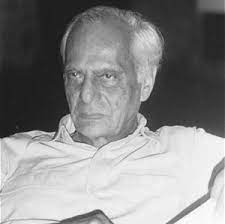
Manohar Malgaonkar portrait

Manohar Malgaonkar (b. 1913) is a well-known novelist and short story writer with over 25 publications to his credit. His important works include Distant Drum, The Princes, A Bend in the Ganges and Bombay Beware.

The present short story A Pinch of Snuff, taken from Contemporary Indian Short Stories in English, is full of wit and adventure. The reader's excitement is built up through the accuracy and the profound comedy of Malgaonkar's narrative.

In this story, the narrator — a young Under-Secretary on probation in a Delhi Ministry — receives an unexpected visit from his mother's brother, Nanukaka. What follows is a comic masterpiece of bluff, persuasion and sheer nerve, as Nanukaka talks his way from a cold reception at the Minister's office to having the Welfare Minister himself call on him at home.

👤
Full NameManohar Malgaonkar
🎂
Born1913
📚
PublicationsOver 25 novels and short story collections
📖
Famous WorksDistant Drum · The Princes · A Bend in the Ganges · Bombay Beware
✍️
Story SourceContemporary Indian Short Stories in English
🎭
StyleWit, adventure, comedy, accurate narration
Quick Overview

Summary

Concise overview of the chapter.

The narrator, an Under-Secretary in Delhi, learns from his mother that his uncle Nanukaka is coming to visit. He is dismayed — Nanukaka is a chaotic, unpredictable character who turns the household upside down. Nanukaka arrives at the station with a kitten in a basket, dressed in traditional Deccani brahmin attire — white hair, impressive moustache, knee-length black coat, red silk pugree, and a white angocha.

His mission: to meet a Minister. But the narrator, being merely an Under-Secretary on probation, cannot arrange such a meeting. Nanukaka, however, is a master manipulator. He first charms his way into Lala Sohanlal Ratiram's house — pretending to be a close friend of "H.B." (Hajrat Barkat Ali, the Ambassador) — and promises to help Sohanlal's son get a Trade Commissioner post.

Then, dressed as a "Hereditary Astrologer to the Maharaja of Ninnore" (a state that doesn't exist), he visits the Minister's house with the narrator disguised as his AIDC in a Jodhpur coat and orange turban. He signs the visitors' book, mentions the Maharaja of Ninnore, and leaves. The Minister, impressed, visits Nanukaka the next day.

Nanukaka leaves Delhi with his mission accomplished. The narrator is left wondering what will happen when the Minister discovers that Nanukaka has never been within a hundred miles of a place called Ninnore — and he only hopes to be far away when it happens. The story is a hilarious satire on Indian bureaucracy, social manipulation, and the power of appearances.

In a linguistic emergency my uncle always turned to his mother tongue. — The Narrator, on Nanukaka
The Text

A Pinch of Snuff

Manohar Malgaonkar's comic tale of Nanukaka's Delhi adventure.

01 Mother's Announcement

Mother's announcement shook me. "Nanukaka is coming," she said.

"Oh, my God!" I said. "Couldn't we send him a wire saying we are leaving — that I am transferred or something?"

"No, dear," Mother said. "He must be already on the train. Besides," she added reassuringly, "he says he cannot stay here for more than two or three days."

"What is he coming to Delhi for — in this heat?"

"He wants to see some Minister."

"What! That means he will be here for weeks! Ministers don't see people for weeks...months! Oh, my God!"

"If your Nanukaka wants to see a Minister, I am sure he will manage to see him," Mother said, "any time of the day or night."

Mother has always been very loyal to her side of the family, and, after all, Nanukaka is her brother. I, on the other hand, may have something of a complex about Ministers. I am an Under-Secretary, on probation, and as such trained to regard Ministers as being two steps higher than God; the Secretaries being just one step higher.

02 The Arrival — and the Kitten

I was waiting on the platform when the train came in. Nanukaka stood in the doorway of a second class carriage; a striking figure, white haired, with an impressive moustache. He still wears the old-fashioned knee-length black coat and the red silk pugree of the Deccani brahmin, and drapes a white angocha round his shoulders.

As I went up, he handed me a basket. "Take this out, quick," he whispered. "I'll join you outside the station."

I asked no questions. I tucked the basket under my arm and turned, only to bump into an enormous Marwari woman who had her head covered in a burka. But my apologies were drowned by the strange sounds emanating from the basket: the protests of an outraged kitten. "Spitts...strust...meow... meooow...meooow!"

I ducked and ran, and mingled with the crowd and squeezed through the gate in the wake of a Sikh marriage party.

Nanukaka was long time coming. The station yard was nearly empty and the last tonga had gone when he emerged, escorted by a fawning ticket inspector.

"No room in the third class, and they wouldn't issue second class tickets without reservation," Nanukaka explained as he came up to me. "Had to travel second on a third class ticket! But it was all arranged quite amicably. Such a nice young man, the TC. You saw how he even came right out with me, so that there should be no trouble. The kitten, of course, travelled free. How is it?"

"Very quiet," I said. Perhaps it is dead, I thought hopefully.

We got into the car, and even before I had changed into second gear, Nanukaka asked: "When have you arranged for the minister to see me? Can't stay here for more than two days — three at the most."

It was a time for frankness. "Look uncle," I said. "I am merely an Under-Secretary, on probation, and it is more than my job is worth to go asking for interviews with Ministers."

"Oh!" Nanukaka said. "I had rather hoped ...oh, I see. Well, never mind." He took a pinch of snuff, brushed his fingers delicately on his angocha, and sat back, closing his eyes and puckering his eyebrows as though in deep thought. He also clucked his tongue several times in a typically Deccani way, registering pity.

03 First Attempt at the Ministry

Mother was waiting on the doorstep, her face wreathed in smiles. She went into squeals of delight over the kitten and made a lot of fuss over Nanukaka. I also found that she had installed him in my bedroom, so that I had to put a charpoy for myself in the back verandah.

At mother's insistence, I had taken two days' leave from the office, and in the afternoon, I drove Nanukaka to the north Block. He went in to see the Minister and I waited in the car park. It was two hours before he returned mumbling colourful Marathi swearwords. I didn't dare ask him what had happened, and drove without saying a word. He cooled down in a little while, though, and said:

"Two hours, I spent, being transferred from one chaprasi to another, tramping through the corridors, and in the end, succeeded in getting a Deputy-Secretary to give me an appointment — three days from now! Shameful! Shameful!" And there was another series of Marathi expletives. In a linguistic emergency my uncle always turned to his mother tongue.

04 The Ratiram Idea

A garnished yellow sports car flashed past us, blaring its horn in an uninterrupted blast, and the young man at the wheel waved his hand at me.

"What a rude man! Who was that?" Nanukaka asked.

"Chap called Ratiram, works in the same Ministry as mine."

"I see."

"There was some talk about his going as Trade Commissioner to Hajrat Barkat Ali, you know, the Ambassador, but they say it is all off now," I said, just to make conversation.

"Why don't you get sent out on one of these foreign assignments?" Nanukaka asked.

"To get sent on a foreign assignment is in the same category as getting an interview with a Minister, Uncle," I said, somewhat unkindly. "It takes pull. Ratiram is the son of Sohanlal Ratiram, you know, the Party Boss in Delhi."

Nanukaka sat up with a jerk. "What was that? What did you say? Sohanlal Ratiram's son! How extraordinary! Well, well!" He leaned back in his seat and stared at me for a long time. "Now let me see. You've got a close-collar Jodhpur coat, haven't you? Good! And can you tie a turban? No? Well, I'll have to put it on you, although I am no expert. This tie-and-collar business is no good these days. Let's go home. After you have changed, we will go and see him."

"See whom?"

"Why, Lala Sohanlal, of course!"

"Do you know him at all?"

"Of course not," Nanukaka said.

05 The Visit to Sohanlal Ratiram

I changed into Jodhpur coat and Uncle Nanukaka tied a huge orange turban round my head. "Act as though you were my, er, a sort of A.D.C.," he cautioned me as we started for Lala Sohanlal's house.

A secretary in spotless white clothes received us and showed us into a cool white room before he asked our business, very politely.

"Just dropped in," Nanukaka said casually. "I had come to Delhi for the Zamindars' Convention, a rather unofficial gathering you know, since we zamindars are not, not exactly, popular, these days ... V.P. has also sent a cable, he wants to see me, but he is not coming from Washington until tomorrow. I thought I might as well see Lalaji and tell him what arrangements we, the zamindars, have made for the agricultural vote..."

Nanukaka sort of trailed off and I could see that he was not really making an impression on the secretary who was just being polite, and playing it safe.

Lalaji must have been free, because from the adjoining room we could just hear the unhurried gurgle of the hookah, and then we could hear the haughty secretary talking to him.

"What day is it, today?" Nanukaka asked me.

I thought he was speaking in an unusually loud voice. "Tuesday," I told him.

"Ooh, only Tuesday, and to think that on Sunday I was in Beirut. Amazing, isn't it?"

I swallowed hard. "Amazing," I agreed.

"And if I had listened to Hajrat, I'd still be abroad. Old H.B. was just dying to drag me to the Foreign Minister."

The steady gurgling of hookah in the next room had suddenly stopped.

"What did you say?" Nanukaka asked, although I hadn't even opened my mouth. "Why didn't I stay back? You know how it was with H.B. the last time, when he was in Geneva. Got me involved in the cotton talks. Besides, from Bombay, S.K. had been sending me cable after cable ..."

That was the moment Lala Sohanlal Ratiram came waddling out of the inner room with the secretary at his heels, and from then on everything was smothered in the saccharine courtesy of the seasoned political campaigner. As soon as the introductions were over, the secretary was sent bustling off to order coffee and sweetmeats and pan.

They sparred guardedly about zamindars and votes and the weather for a few minutes before coming to brass tacks. "I hear you know Hajrat Barkat Ali, well," Sohanlal said with an ingratiating grin.

"Oh, old H.B.! How did you know I know H.B.? Actually, we were at school together, always regarded me as a sort of elder brother. Rather touching, really; even today, he seldom takes a big decision without consulting me. When the P.M. offered him the Embassy, who do you think had to make up H.B.'s mind for him?"

"You?"

"That's right, me. Good old H.B."

"Ha, ha, ha, ha," laughed Sohanlal, now showing all his pan-stained teeth. "In that case it is a lucky day that you have come to my humble house. Very lucky, because my son — he is in the Balances Ministry here — he was going as Trade Commissioner to Hajrat Barkat Ali. But you know how there are wheels within wheels. Someone seems to have poisoned the Ambassador's mind about my son; about some transaction concerning evacuee-property. Actually, it was a perfectly legitimate ..."

Nanukaka waved away any further explanation. "That should be quite simple," he announced. "I'll write and tell H.B. to do it. No, no. Don't thank me at all. After all, we, er, we men in the public eye, must do things for one another, ha, ha. One good turn deserves another."

Nanukaka opened his silver snuffbox and took a pinch. Then, flicking on his angocha, he casually mentioned the name of the Welfare Minister.

The fixed grin on Sohanlal's face vanished. "Is he a friend of yours?" Nanukaka admitted. "No, not exactly."

"I am so glad," Sohanlal said, relieved. "So glad. That man; such ingratitude! I gave him a ticket, helped him in every way, and what do I get in return?"

It turned out that the Minister and Lala Sohanlal, once the best of friends, were now at daggers drawn, since last year, when the Minister had refused to consider a proposal for his daughter to marry Lalaji's son.

"He wants a prince!" Sohanlal snorted. "What is a prince, these days! Faugh! Confidential, I can tell you that the Minister has burnt his boats; I'd be surprised if he is given a ticket for the next elections; very surprised. He turns my son down, and wants a prince! Baah! And what is even more funny, I am told that so far they haven't even exchanged horoscopes; even the astrologers on both sides haven't come together to decide whether it would be an auspicious match!"

"Disgraceful!" Nanukaka snorted. "Disgraceful! What prince did you say?"

"Some twopenny state called Ninnore."

06 The Plan and the Big Car

We left the house soon after that, Nanukaka having again promised that he would write to "Old H.B." that very day. As we drove away, both Lalaji and his superior secretary were bowing to him from the porch.

Nanukaka was strangely silent that evening and went to bed soon after dinner, but in the morning, he was chirpy again.

"We are going to the Minister's house, this morning," he announced.

"Not me, please, Uncle," I appealed.

He inhaled some snuff before he spoke, and by that time he seemed to have forgotten what I had said. "This car of yours; too old, too small. We'll need something much more impressive. You noticed how that secretary treated us coldly at first. If we had gone in a bigger car, he would have been quite different."

"What about a taxi?"

"No; not a taxi. A private car, driven by a liveried chauffeur; the bigger the better."

I remembered that an acquaintance of mine has been trying to sell for some months an enormous, stately, outlandish car that would have only been built for a court procession. I told Nanukaka about it.

"That's it! We'll take it out for a 'brief' trial," he suggested breezily.

"I am sure we could," I said, "if we looked like genuine buyers. But do we? These motor-car touts can smell a rich man a mile off."

"You leave that to me," Nanukaka said. "You just leave the details to me."

"And what about this liveried chauffeur?" I asked.

"You, of course," Nanukaka said blandly.

He took out his cheque-book and wrote a cheque for a thousand rupees. He folded it neatly and put it into the inner pocket of an old coat of his. "Now call your dhobi," he told me.

I called the dhobi, and Uncle gave him the coat and took him outside and had a talk with him. Then we drove over to the Sikka Auto Dealers and Nanukaka asked if he could try out the car we had in mind.

We had barely got talking to the manager when the dhobi rushed into shop, holding Nanukaka's old coat in one hand and brandishing the cheque with the other. "Oh, there you are!" he panted. "Look what you had left in this coat of yours!"

Nanukaka held out the cheque at the arm's length, and clucked his tongue several times. "How careless of me!" he said. "I am always doing this sort of thing. Bearer cheque too; anyone could have cashed it. Here, my good man," he said to the dhobi, "here is a reward for you. There is nothing like honesty," and he gave him a two-rupee note and a pat on the back.

After this demonstration of wealth, it was quite easy about the car. I drove, wearing my white Jodhpur coat and the orange turban, and Nanukaka sat regally at the back, looking every inch what he was supposed to be: a hereditary pundit from a princely state.

07 The Minister's House — and the Visitors' Book

We drove to the Minister's house, and the servants and the secretary fussed around Nanukaka who refused to state his business but merely called for the visitors' book.

"I have just come to make a formal call," he announced. "I have no wish to disturb the Minister. It is just a formality that we in the old princely states still observe. His Highness is a great stickler for these courtesies." They brought the visitors' book, and I watched Nanukaka in admiration as he wrote his name with flourish and added, "Hereditary Astrologer to the Maharaja of Ninnore." At the end he gave his Delhi address: my address.

Without another word, and as though he were in a tearing hurry, he got into the car and said loudly:

"Take me to the Maharaja Sutkatta's palace. I have to return all those horoscopes entrusted to me." As the car turned out of the gate, I glanced backwards and saw a huge dark, khaddar-clad figure peering at us from an upper-story window.

We had just finished tea, and we were trying to house-break the new kitten which had just made a puddle on the floor when the car with the white triangle stopped in front of the house, and Nanukaka went out with folded hands to receive the Welfare Minister who had come to see him.

Nanukaka left yesterday, his mission accomplished. I never found out what it was that he wanted to see the Minister about. Also, I wonder what is going to happen when the minister discovers that my uncle has never been within a hundred miles of a place called Ninnore, although I am now convinced that Nanukaka will deal with the situation without allowing a single fold of his angocha to fall out of place.

Only, when it happens, I want to be somewhere far out of range.
Quick Revision

Key Themes — A Pinch of Snuff

Six ideas that shape Manohar Malgaonkar's comic short story.

🎭 The Art of the Bluff

Nanukaka achieves everything through sheer nerve and improvisation — a dropped name, a borrowed car, a fake title in a visitors' book. He has no contacts, no authority, and no plan; he has only the confidence to act as though he does.

🏛️ Bureaucracy and Power

The narrator regards Ministers as "two steps higher than God." Getting an interview takes weeks; a foreign assignment "takes pull." The story gently mocks the way power actually works in Delhi — through contacts, favours and flattery.

😂 Comedy of Manners

From the kitten in the basket to the dhobi brandishing a cheque in the car showroom, each scene builds on comic misunderstanding. The humour comes from accurate observation of how people behave around wealth and influence.

👨‍👩‍👦 Family and Loyalty

Mother is "very loyal to her side of the family" and welcomes Nanukaka with delight, while her son is exasperated. The story plays on the familiar tension between family obligation and personal inconvenience.

🇮🇳 Old India Meets New

Nanukaka wears the old-fashioned knee-length black coat and red silk pugree of the Deccani brahmin. He represents an older, princely India of zamindars and courtesies, navigating the new India of ministries and party bosses.

😅 The Uncomfortable Truth

At the end, the narrator wonders what will happen when the Minister discovers Nanukaka has never been within a hundred miles of Ninnore. "I want to be somewhere far out of range." The story exposes the reality we live in — and leaves us laughing uneasily.

Assessment

Test Your Understanding

Multiple choice · Fill in the blanks · Short answer. Everything is drawn from the text above.

🧠 Part A — Multiple Choice

Choose the best answer for each question. Click Check Answers at the end to see your score.

Score: — / 0

✏️ Part B — Fill in the Blanks

Complete each sentence on the basis of the text. Type your answer, then click Check Answers.

Score: — / 0

📝 Part C — Short Answer Questions

Think through your answer first, then click Show Model Answer to compare.

Textbook Exercises

Complete Exercise Bank

All questions from the Bihar Board Class 12 English Prose textbook — with answers and model responses.

A. Answer the Following Questions Orally

  • Do guests visit your house frequently? How do you respond to them?
  • Do you like all of them equally? How often do you entertain your guests gladly?
  • At times you may have to welcome a guest whom you don't like much. How do you do this?

B.1.1 Complete the Sentences

Complete the following sentences on the basis of what you have studied. Click to reveal the answer.

a____________ was coming to visit the narrator's family.
Nanukaka
bThe narrator was ____________ on probation.
an Under-Secretary
cNanukaka was to stay for ____________.
not more than two or three days (three at the most)
dNanukaka was coming to Delhi to ____________.
see some Minister
e____________ informed the Under-Secretary about Nanukaka's visit.
Mother
fThe Under-Secretary had to put a charpoy for himself in the back verandah because ____________.
Mother had installed Nanukaka in his bedroom.
gNanukaka was related to the narrator as he was his ____________.
maternal uncle (Mother's brother).

B.1.2 Answer the Following Questions Briefly

1The news that made the mother happy disturbed her son. Why were their responses so different?
Mother was happy because Nanukaka was her brother and she was loyal to her side of the family; she loved him and was delighted to welcome him. Her son was disturbed because he knew that Nanukaka wanted to see a Minister, and as an Under-Secretary on probation he found Ministers almost unapproachable. He dreaded the weeks of waiting and the inconvenience of losing his bedroom to his uncle.
2Do you have a similar experience? Has your response to the news of the arrival of any guest ever been different from that of other members of the family?
Yes, this is a common experience. Often one family member is delighted to welcome a guest while another may feel inconvenienced, especially if the guest is demanding or if the visit disrupts routines. Different members have different relationships with the guest and different responsibilities, so their responses naturally differ.
3'Had to travel second on a third class ticket? But it was all arranged quite amicably?' What 'arrangement' is Nanukaka referring to? How can such arrangement be 'amicable'?
Nanukaka is referring to the unofficial arrangement he made with the Ticket Collector (TC). Since there was no room in third class and second class tickets were not issued without reservation, he travelled in second class on a third class ticket. The arrangement was 'amicable' because Nanukaka managed to win over the TC with his charm and smooth talk — the TC even escorted him out of the station to avoid trouble. It was friendly rather than confrontational.

B.2.1 Write T for True and F for False

Click to reveal the answer with explanation.

aIt was very easy for the narrator to get sent on a foreign assignment.
False (F). The narrator says getting a foreign assignment is like getting an interview with a Minister — "It takes pull."
bRatiram was the son of Sohanlal Ratiram.
True (T). The narrator tells Nanukaka that Ratiram is "the son of Sohanlal Ratiram, you know, the Party Boss in Delhi."
cSohanlal Ratiram was the Party boss in Delhi.
True (T). The narrator describes him exactly as "the Party Boss in Delhi."
dNanukaka went to Lala Sohanlal because they both were Zamindars.
False (F). Nanukaka did not know Sohanlal at all. He went to him purely because the narrator mentioned that Sohanlal was the Party Boss — and Nanukaka saw an opportunity to use the name of "Old H.B." to gain influence.
eNanukaka visited Lala Sohanlal in the guise of an astrologer.
False (F). He visited Sohanlal in the guise of a zamindar who knew Hajrat Barkat Ali. It was at the Minister's house that he signed the visitors' book as "Hereditary Astrologer to the Maharaja of Ninnore."
fNanukaka's meeting with Sohanlal Ratiram was very successful.
True (T). Nanukaka gathered crucial information about the Minister's quarrel with Sohanlal, and both Sohanlal and his secretary bowed to him from the porch as he left.

B.2.2 Answer the Following Questions Briefly

1The Under-Secretary always obeyed Nanukaka, although he was never willing to do so. Why?
The Under-Secretary obeyed Nanukaka partly because he was his uncle and a guest, and partly because Nanukaka had a commanding personality. His mother was also devoted to her brother. Moreover, curiosity and the hope of some benefit made him go along with Nanukaka's schemes, even when he disapproved of them.
2"This tie-and-collar business is no good these days." What did Nanukaka mean to say?
Nanukaka meant that Western-style dress — the shirt and tie — did not carry the same authority and impressiveness in Delhi as traditional Indian dress. He wanted the narrator to wear a close-collar Jodhpur coat and a turban, which would make him look like a person of princely or aristocratic background and thus create a stronger impression.
3How did the Under-Secretary change his appearance to accompany Nanukaka?
The Under-Secretary changed into a close-collar Jodhpur coat, and Nanukaka tied a huge orange turban round his head. He was told to act as Nanukaka's A.D.C. (aide-de-camp). Later, driving the big car, he also wore his white Jodhpur coat and orange turban.
4Who is a Zamindar? Do you know any Zamindar in your locality? What do the people in your locality think about him?
A zamindar is a landowner, especially one who historically collected revenue from peasants on behalf of the government. In Nanukaka's time, zamindars were often wealthy, influential and associated with the old princely order. (Personal answers about one's own locality will vary.)
5How did Nanukaka impress Sohanlal Ratiram?
Nanukaka impressed Sohanlal by pretending to be a close friend of Hajrat Barkat Ali (H.B.), the Ambassador. He spoke loudly on purpose about Beirut, Geneva and cables from Bombay, knowing Sohanlal was listening from the next room. When he offered to write to H.B. about Sohanlal's son's Trade Commissioner posting, Sohanlal was completely won over.
6What important information did he collect at Ratiram's place?
Nanukaka learned that the Welfare Minister and Lala Sohanlal were once close friends but were now "at daggers drawn" because the Minister had refused to let his daughter marry Sohanlal's son. The Minister wanted a prince for his daughter — specifically a prince from a "twopenny state called Ninnore." This information gave Nanukaka the exact lever he needed for his next move.
7Who is a Prince? Do we have any prince now? If yes, do they enjoy the same privileges which they used to do?
A prince is a male member of a royal family, especially the son of a king or queen. After India abolished princely titles and privileges in 1971, princes no longer enjoy the same official powers and privileges they once did. Some still hold property and social influence, but their political and legal authority has been greatly reduced.

B.3 Answer the Following Questions Briefly

1Who was the second important person Nanukaka had planned to meet?
The second important person was the Welfare Minister — the same Minister whom Nanukaka had originally come to Delhi to see, and with whom Sohanlal Ratiram was now at daggers drawn.
2What preparation did he make to meet him?
Nanukaka arranged for an enormous, stately, outlandish car from Sikka Auto Dealers by pretending to be a rich buyer — using the dhobi and a cheque for a thousand rupees as a demonstration of wealth. He dressed the narrator in a white Jodhpur coat and orange turban as his liveried chauffeur, while he himself sat regally at the back, looking like a hereditary pundit from a princely state.
3What new role did Nanukaka give the Under-Secretary to play?
Nanukaka gave the Under-Secretary the role of his liveried chauffeur — driving the big car while wearing a white Jodhpur coat and orange turban. Earlier, at Sohanlal's house, he had also played the role of Nanukaka's A.D.C.
4How did he manage to impress the Sikka Auto Dealers?
Nanukaka put a bearer cheque for a thousand rupees into the inner pocket of an old coat and gave the coat to the dhobi. The dhobi then rushed into the showroom brandishing the cheque, as if he had found it. Nanukaka pretended to be careless with money, rewarded the dhobi for his honesty, and thus created the impression of being a very wealthy man. After this demonstration of wealth, getting the car was easy.
5What did he do at the minister's residence?
At the Minister's residence, Nanukaka refused to state his business and merely called for the visitors' book. He wrote his name with a flourish and added, "Hereditary Astrologer to the Maharaja of Ninnore," giving the narrator's Delhi address. Then he hurried away, saying loudly that he had to return horoscopes entrusted to him by the Maharaja Sutkatta.
6How did he impress the minister?
Nanukaka impressed the Minister by signing the visitors' book as the "Hereditary Astrologer to the Maharaja of Ninnore." The Minister, who wanted a prince from Ninnore for his daughter, saw this as a golden opportunity and came personally to call on Nanukaka at the narrator's house — with folded hands.
7Is the Under-Secretary impressed with Nanukaka at any point? When and why? Find out the evidence from the story.
Yes. The narrator is impressed when Nanukaka signs the visitors' book at the Minister's house. He says: "I watched Nanukaka in admiration as he wrote his name with flourish and added, 'Hereditary Astrologer to the Maharaja of Ninnore.'" He is also impressed by how Nanukaka manages the car dealer and the Minister. At the end, he admits he is "convinced that Nanukaka will deal with the situation without allowing a single fold of his angocha to fall out of place."

C.1 Long Answer Questions

Prepare detailed answers. Click to reveal model responses.

1Nanukaka tells lots of lies. Why does he do so? Does he succeed in his pursuit?
Nanukaka tells lies to create an impression of power and influence. He claims to be a close friend of Hajrat Barkat Ali and to have been consulted by him on major decisions. He signs the visitors' book as the "Hereditary Astrologer to the Maharaja of Ninnore." His purpose is to gain access to powerful people and to get things done for himself and his family. He does succeed — the Minister himself comes to call on him, and Sohanlal Ratiram bows to him from his porch. His lies work because he tells them with complete confidence and because people in Delhi are eager to believe in influence.
2What impression does Nanukaka make on you? Do you like him? Attempt a character sketch of Nanukaka.
Nanukaka is a charming, resourceful and utterly unscrupulous old man. He is a white-haired Deccani brahmin who still wears the old-fashioned knee-length black coat and red silk pugree. He is a master of improvisation — he can take any situation and turn it to his advantage. He uses snuff constantly, which gives him time to think. He has immense self-confidence and no shame. I like him because he is so entertaining and so human. He is not malicious; he simply wants to get things done. His energy and wit are infectious, even though his methods are dubious.
3Suppose you have Nanukaka as your uncle. How would you behave with him? Explain in detail.
If Nanukaka were my uncle, I would be both exasperated and amused. Like the narrator, I would try to resist his schemes but would probably end up helping him anyway, because he is so persuasive and because he is family. I would be careful not to get into any serious trouble, but I would enjoy the adventure. I would also learn a great deal from his people-reading skills and his ability to stay calm in any situation.
4Nanukaka made a big promise to Sohanlal Ratiram. Did he ever fulfil his promise?
Nanukaka promised Sohanlal that he would write to Hajrat Barkat Ali (H.B.) to have Sohanlal's son appointed as Trade Commissioner. We do not know whether he actually wrote the letter. The narrator does not tell us. It is possible that Nanukaka wrote a letter, and it is equally possible that he did not. In any case, Nanukaka's promise to Sohanlal was not his main purpose — it was a means of gaining information about the Minister.
5Can a person like Nanukaka be more successful in the present society? Give reasons.
Yes, a person like Nanukaka can be very successful in the present society, because influence and networking still matter a great deal. People who can talk confidently and make others believe in them often get ahead. However, in today's world of instant communication and fact-checking, his lies might be discovered more quickly. His success would depend on how well he could adapt to new conditions.
6'I wonder what is going to happen when the Minister discovers that my uncle has never been within a hundred miles of a place called Ninnore... Only, when it happens, I want to be somewhere far out of range.' What light does it throw on the motive of the writer in the story? Does he want to glorify manipulation? Warn us of the consequences? Expose the reality we are living in?
The narrator's remark shows that he is aware of the hollowness of Nanukaka's success. The writer is not simply glorifying manipulation; he is exposing the reality of a society where appearances matter more than truth, where a fake title in a visitors' book can bring a Minister to your door. At the same time, the narrator's wish to be "far out of range" suggests that the consequences of such deception are real and might be unpleasant. The writer is laughing at the system but also warning us about it.
7What is 'linguistic emergency'? Do we all face it? How does it affect our speech?
A 'linguistic emergency' is a situation in which a person is so emotional or upset that they cannot express themselves properly in their second language and instinctively switch to their mother tongue. Nanukaka does this when he is angry — he uses "colourful Marathi swearwords" and "Marathi expletives." Yes, most of us face this at some time. It affects our speech by making us use words and expressions from our first language, sometimes without even realizing it.
8Discuss the significance of the title. How is it related to the theme of the story?
The title "A Pinch of Snuff" refers to Nanukaka's habit of taking snuff whenever he needs a moment to think or to cover a pause. The snuff box is a small, old-fashioned, personal object, and it symbolizes Nanukaka's old-world charm and his ability to stay calm under pressure. Whenever he takes a pinch of snuff, he is buying time, composing his next line of dialogue, or preparing his next move. The title captures the essence of the story: an old man's wit, timing and composure in the face of every challenge.

C.2 Group Discussion

Discuss the following in groups or pairs.

  • Taking tobacco in any form is injurious to health.
  • A guilty mind is always suspicious.

C.3 Composition

Write a paragraph of about 100 words on each of the following.

  • A scene at the railway platform
  • Influence of an astrologer

D.1 Dictionary Use

Ex 1Correct the spelling of the following words: mustach, assinment, ambasador, secretary, campainer, caution, genuine, casualty, leiger, headitary.
Corrected spellings:
moustache · assignment · ambassador · secretary · campaigner · caution · genuine · casualty · ledger · hereditary
Ex 2Look up a dictionary and write two meanings of each of the following words — the one in which it is used in the lesson and the other which is more common: interview, transfer, blast, trade, course, touch, surprise, match, snort.
interview: (lesson) a formal meeting with a Minister or official; (common) a conversation for a job or news report.

transfer: (lesson) being moved from one post to another; (common) to move something from one place to another.

blast: (lesson) a loud, continuous sound (of a horn); (common) an explosion.

trade: (lesson) business or commerce; (common) to exchange something.

course: (lesson) a direction or path; (common) a series of lessons or a dish in a meal.

touch: (lesson) to affect or move emotionally; (common) to put your hand on something.

surprise: (lesson) an unexpected event; (common) to cause someone to feel amazed.

match: (lesson) a marriage alliance; (common) a game or contest.

snort: (lesson) to make a sound expressing contempt; (common) to breathe noisily through the nose.

D.2 Word-formation

Use suffixes to the verbs given below to make them nouns: impress, arrange, transact, explain, acquaint, manage, demonstrate, marry.

QForm nouns from the given verbs using suffixes such as -ment, -ion, -ance, etc.
impress → impression
arrange → arrangement
transact → transaction
explain → explanation
acquaint → acquaintance
manage → management
demonstrate → demonstration
marry → marriage

D.3 Word-meaning

Find from the lesson words the meanings of which have been given. The last part of each word is given.

Ex 1Find the words from the lesson. (a) in a friendly manner and without argument — ___ably; (b) large in size or quantity — ___mous; (c) attracting your interest or attention — ___king; (d) small nail with a flat top — ___cks; (e) correct according to law — ___mate; (f) extremely strange and unusual — ___dish.
a) amicably
b) enormous
c) striking
d) tacks
e) legitimate
f) outlandish

D.4 Phrases

Find the sentences in the lesson where these phrases are used, then use them in sentences of your own.

aat daggers drawn
In the lesson: "It turned out that the Minister and Lala Sohanlal... were now at daggers drawn."

My sentence: The two neighbours have been at daggers drawn ever since the boundary dispute began.
bdrop in
In the lesson: "Just dropped in," Nanukaka said casually.

My sentence: I thought I would drop in on my way home to see how you were doing.
cas soon as
In the lesson: "As soon as the introductions were over, the secretary was sent bustling off..."

My sentence: As soon as the bell rang, the students rushed out of the classroom.
dturn out of
In the lesson: "As the car turned out of the gate, I glanced backwards..."

My sentence: The taxi turned out of the main road and disappeared into the narrow lane.
eof course
In the lesson: "The kitten, of course, travelled free."

My sentence: She will, of course, be invited to the wedding — she is family.
ftry out
In the lesson: "We'll take it out for a 'brief' trial." (and "asked if he could try out the car")

My sentence: Before buying the bicycle, I asked if I could try it out around the block.

E. Grammar — Tag Questions

Write tag questions for the following sentences.

1Amod was speaking in an unusually loud voice.
Amod was speaking in an unusually loud voice, wasn't he?
2That should be quite simple.
That should be quite simple, shouldn't it?
3Nanukaka clucked his tongue several times.
Nanukaka clucked his tongue several times, didn't he?
4You will do the work.
You will do the work, won't you?
5Gulu is eating a mango.
Gulu is eating a mango, isn't he?

F. Activity — Addictions and Their Effects

The writer has mentioned several items people are usually addicted to. Make a list of such items mentioned in the story and briefly mention the harmful effects of each on health.

QList the addictive items mentioned in the story and their harmful effects.
Items mentioned in the story:
1. Snuff (tobacco) — Nanukaka takes pinches of snuff throughout the story.
2. Hookah — Lala Sohanlal is heard gurgling on his hookah in the next room.
3. Pan — Sohanlal has pan-stained teeth.

Harmful effects:
• Snuff: Contains tobacco and nicotine; causes nasal cancer, mouth cancer, gum disease, and nicotine addiction.
• Hookah: Inhaling hookah smoke carries the same risks as smoking — lung cancer, heart disease, respiratory illness, and exposure to carbon monoxide.
• Pan (with tobacco): Causes oral cancer, gum disease, tooth decay, and staining of teeth; betel quid with tobacco is a known carcinogen.